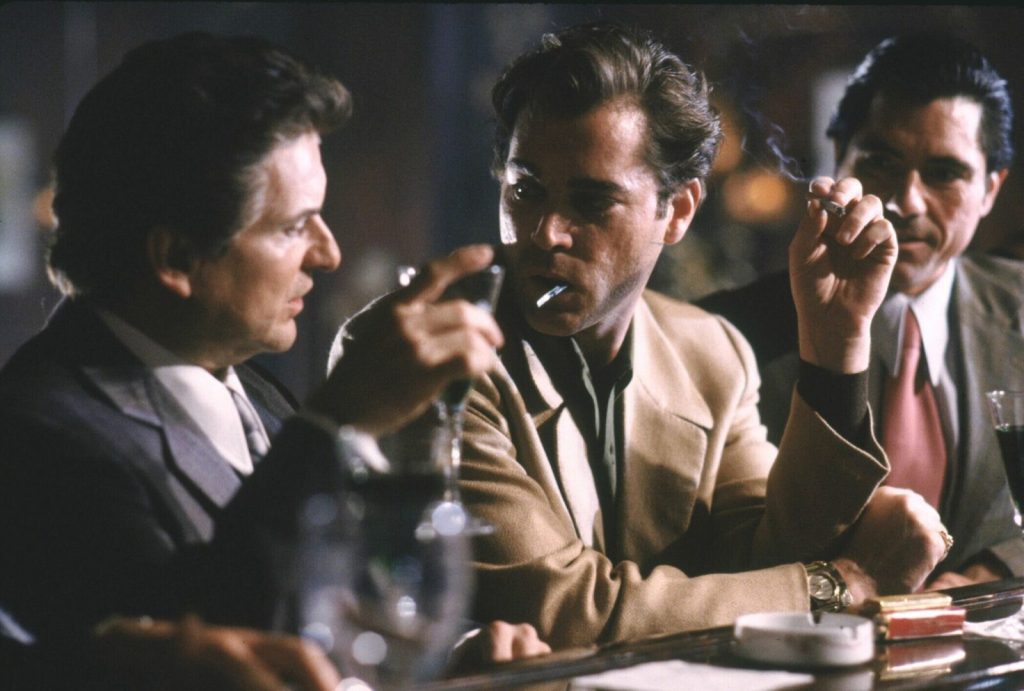
Directed by Martin Scorsese
A masterful and unflinching portrayal of life inside the American Mafia. Based on the true story of mob associate Henry Hill (played by Ray Liotta), the film chronicles his rise and fall over several decades, offering a gripping look into the inner workings of organized crime. With its fast pace, vivid characters, and brutal honesty, Goodfellas stands as one of the defining crime films of all time.
One of the film’s greatest strengths is its dynamic storytelling. Scorsese employs a voiceover narration, rapid editing, and a vibrant, era-defining soundtrack to immerse the audience in Henry’s world. The film moves with the energy and confidence of someone deeply familiar with its subject, making even the mundane feel electric. The famous Copacabana tracking shot, in which Henry takes his date through the back entrance of the club in one fluid take, is just one example of Scorsese’s masterful direction.
The performances are outstanding across the board. Ray Liotta brings charm and unease to Henry, balancing likability with moral ambiguity. Robert De Niro is quietly menacing as the calculating Jimmy Conway, while Joe Pesci steals every scene as the unpredictable and violent Tommy DeVito—a performance that earned him an Academy Award for Best Supporting Actor.
Goodfellas doesn’t romanticize the mob lifestyle; instead, it shows its allure and its consequences with equal weight. The film’s descent into paranoia, addiction, and betrayal is as compelling as its early glamor. The final act, with Henry’s crumbling life and frantic voiceover, is a perfect capstone to the story.
With its razor-sharp writing, iconic scenes, and fearless direction, Goodfellas is not only a landmark in gangster cinema but a brutal, stylish meditation on ambition, loyalty, and the American dream gone wrong.
 Will's Top Ten Movies Ever Put to Screen