Directed by Paul Thomas Anderson
A powerful and haunting exploration of greed, ambition, and the corrupting influence of power in early 20th-century America. Loosely based on Upton Sinclair’s novel Oil!, the film follows Daniel Plainview (played masterfully by Daniel Day-Lewis), a silver miner turned ruthless oil tycoon, as he manipulates his way to wealth and dominance in California’s emerging oil industry.
One of the film’s most striking strengths is its central performance. Day-Lewis delivers a tour-de-force portrayal of Plainview, capturing both his charisma and his monstrous inner decay. His performance is both terrifying and mesmerizing, grounding the film’s slow-burn narrative with searing intensity. The character’s moral descent is rendered with nuance, making him both repellent and tragically human.
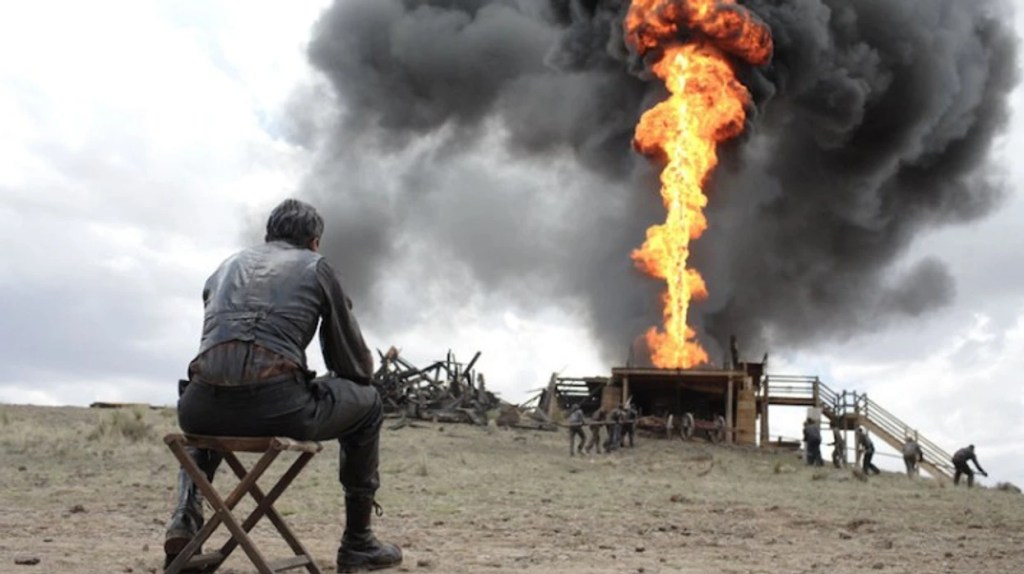
Anderson’s direction is meticulous and confident, using long takes and a brooding atmosphere to build a sense of inevitable collapse. The cinematography by Robert Elswit is stunning – wide shots of barren landscapes contrast with intimate, claustrophobic interiors, visually reflecting Plainview’s increasing isolation. Jonny Greenwood’s avant-garde score is another highlight, infusing scenes with tension and unease, often working against traditional emotional cues to emphasize the film’s unsettling tone.
The film also stands out for its thematic depth, examining capitalism, religion, and identity. The battle between Plainview and the young preacher Eli Sunday (Paul Dano) becomes a symbolic clash between commerce and faith, each exploiting the other for control.
Ultimately, There Will Be Blood is a chilling character study and a grand statement on the American spirit’s darker undercurrents. With its unforgettable performances, striking visuals, and thematic richness, it remains one of the most important and critically acclaimed films of the 21st century.
 Will's Top Ten Movies Ever Put to Screen